PoliticsBreaking
Trump Targets Muslim Candidate El-Sayed with 9/11 Rhetoric at Michigan Rally
At a campaign event in Michigan, the former US President invoked the September 11 attacks while speaking about Abdul El-Sayed, a Muslim Senate candidate.
Former US President Donald Trump escalated his rhetoric against Muslim Senate candidate Abdul El-Sayed at a recent campaign rally in Michigan, reportedly likening him to the individuals responsible for the September 11, 2001 attacks. The comments, delivered ahead of the upcoming midterm elections, have been characterised by some observers as Islamophobic and specifically designed to portray Mr El-Sayed as an "anti-American Muslim radical."
During his address at the Michigan event, Mr Trump made direct reference to United Flight 93, one of the four planes hijacked during the devastating 9/11 attacks. This particular comparison was part of a broader effort to frame Mr El-Sayed in a highly negative light, with the former president reportedly stating his intent was "to keep a jihadist out." The rally was a pivotal event in Mr Trump's campaign activities leading up to the midterm vote, and his remarks concerning Mr El-Sayed quickly emerged as a significant point of public and media discussion.
The statements represent a notable intensification of political discourse, particularly in their direct association of a political candidate with a profoundly traumatic national event like the September 11 attacks. United Flight 93 tragically crashed in Shanksville, Pennsylvania, after passengers and crew members bravely resisted the hijackers, preventing the aircraft from reaching its presumed target. Drawing such a stark and emotionally charged parallel in a political context is widely seen as a highly aggressive rhetorical tactic, designed to provoke strong reactions and cast a candidate in an extremely unfavourable light.
Mr Trump's strategy appears to involve painting Mr El-Sayed as a figure fundamentally opposed to American values and security. This approach, which focuses on a candidate's religious background and employs loaded terms such as "jihadist," aligns with a pattern of rhetoric that critics have previously labelled as divisive and inflammatory. The targeting of a Muslim candidate with such severe language has raised immediate concerns about the potential impact on public perception, the integrity of political debate, and the broader social cohesion within the diverse American electorate.
The Michigan rally, therefore, serves as a prominent example of the combative and often personal tone adopted in certain political campaigns. The deliberate use of loaded terms and historical allusions to characterise an opponent underscores a contentious style of engagement as the midterm elections draw closer. Such tactics frequently ignite debate regarding the appropriate boundaries of political speech, particularly when they touch upon sensitive issues of religion, national identity, and historical tragedy.
This incident highlights ongoing discussions within the political sphere about the nature of modern campaigning and the treatment of minority candidates seeking public office. The pointed focus on Mr El-Sayed's identity and the grave accusations levelled against him mark a significant moment in the current election cycle. It prompts scrutiny of the underlying motivations behind such public statements and their potential long-term consequences for democratic processes and the representation of diverse communities. The event underscores the continued prevalence of identity politics as a powerful, albeit often controversial, force in contemporary American electoral contests.
Reporting by the The Indian Morning Post Editorial Desk.
Related in Politics
White House Briefly Locked Down After Two Security Incidents
The White House was briefly placed under lockdown following two distinct security incidents in its vicinity. A vehicle crashed near Lafayette Park, while a separate individual breached a barrier, prompting authorities to close surrounding roads. President Donald Trump was reported to be inside the presidential residence during the events.
9 November 2026 · 1 min read

Israeli President Picks Eisenkot to Form New Government
Israel's President Isaac Herzog has formally tasked Gadi Eisenkot, leader of the Yashar party, with forming the nation's next government. The decision follows a recent general election that left neither Eisenkot nor incumbent Prime Minister Benjamin Netanyahu with a clear path to power. Eisenkot now has 28 days to secure a majority of 61 seats in the Knesset.
7 November 2026 · 1 min read

Sonia Gandhi Memoir Rekindles India's Emergency-Era Debate
A new political dispute has erupted in India between the Congress and Bharatiya Janata Party (BJP) ahead of the release of Sonia Gandhi's memoir. The book's reported criticisms of the BJP and its concerns about democratic institutions have led the ruling party to invoke the 1975 Emergency, questioning Congress's historical commitment to civil liberties. The controversy marks another flashpoint in India's ongoing political landscape.
7 November 2026 · 1 min read
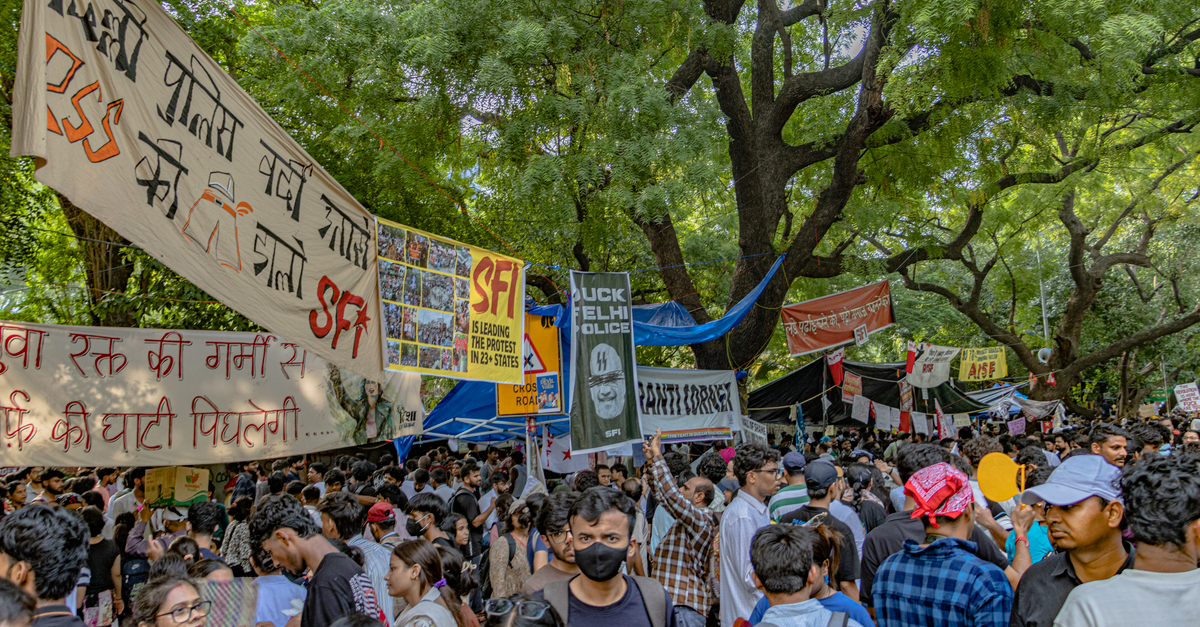
CJP Leaders Appear Before Delhi Police Amidst Foreign Funding Allegations
Leaders of the Cockroach Janata Party (CJP), Saurav Das and Ashutosh Ranka, have appeared before the Delhi Police's Crime Branch in connection with an alleged trespassing incident during an October protest at Jantar Mantar. Their appearance coincides with recent accusations from a Union Minister, Jitendra Singh, who alleged that the CJP receives foreign financial support from US-based donors and Pakistani politicians. The CJP has vehemently rejected these claims.
5 November 2026 · 1 min read