ScienceBreaking
Rare Pileus Cloud Observed Above Montana Wildfire
NASA scientists documented a translucent, cap-like cloud hovering atop a towering smoke column from the Sand Creek fire in August 2026.
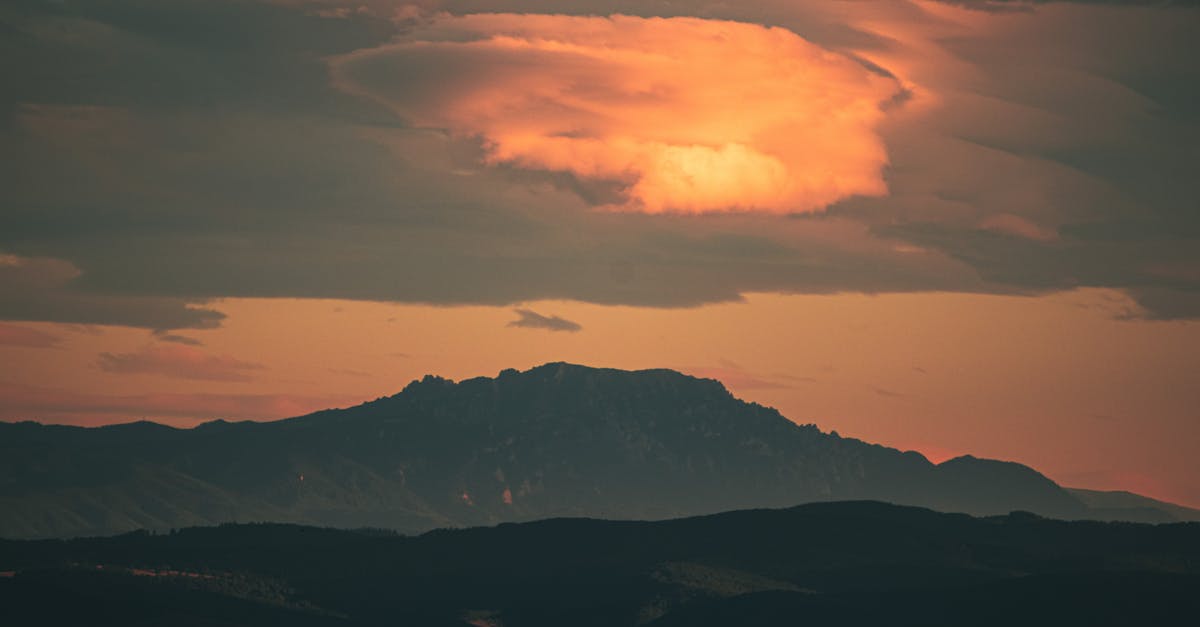
Scientists observing wildfires from the air in August 2026 documented a rare atmospheric phenomenon: a translucent, cap-like cloud hovering atop a towering smoke column from a blaze in Montana. This 'pileus' cloud, observed over the Sand Creek fire, offers a unique insight into the intense atmospheric dynamics generated by large wildland fires.
The observation occurred on August 11, 2026, during a research flight by NASA scientists. Operating an ER-2 aircraft equipped with the MASTER (MODIS/ASTER Airborne Simulator) instrument, the team was primarily focused on intercepting and studying the massive, smoke-laden clouds, known as pyrocumulus, that frequently form above major wildfires. Pyrocumulus clouds are essentially fire-generated thunderstorms, capable of injecting smoke and aerosols high into the atmosphere, impacting weather patterns and air quality over vast regions.
The presence of a pileus cloud, also referred to as a 'cap cloud' or 'scarf cloud' due to its smooth, veil-like appearance, is considered by atmospheric scientists to be an indicator of particularly vigorous convection. These ephemeral formations develop when a strong updraft, in this case, driven by the intense heat of the wildfire, forces moist air rapidly upwards. As this air ascends, it cools and condenses, forming the distinctive cloud layer just above the main convective column. The observation over the Sand Creek fire provided a tangible example of these powerful atmospheric forces at play.
Images captured by the MASTER instrument during the flight provided detailed views of the phenomenon. Both natural-color and false-color images were obtained, offering different perspectives on the fire and its atmospheric effects. In the false-color imagery, active fire fronts were rendered in vibrant pink and yellow hues, while areas already consumed by the blaze appeared brown. Clouds were depicted as white, and the extensive smoke plumes were visible as blue-purple. These visual data sets contribute valuable information to the ongoing study of fire-atmosphere interactions.
The mission, which saw scientists taking to the air throughout the summer of 2026, aimed to enhance understanding of these complex fire-induced cloud systems. The unexpected observation of the pileus cloud, as noted by researchers such as RoseAnne Dominguez, who captured the MASTER images, and Michala Garrison, who annotated them, served as a significant bonus. Such detailed observations from airborne platforms are crucial for refining models of fire behaviour and atmospheric responses, ultimately aiding in wildfire management and climate research efforts. The ephemeral nature of pileus clouds makes their direct observation particularly valuable for scientists tracking extreme weather phenomena.
Reporting by the The Indian Morning Post Editorial Desk.
Related in Science

NASA Advances Lunar Base Plans with New Technology and Infrastructure Awards
NASA has unveiled a series of awards and mission updates aimed at expanding its lunar base exploration and scientific capabilities. These investments will support the development of commercial robotic delivery systems, a nuclear-powered rover, and crucial surface infrastructure. The initiatives are part of a broader effort to establish a permanent human outpost at the Moon’s South Pole.
8 November 2026 · 1 min read

NASA Selects 19 New Citizen Science Projects, Expanding Volunteer Research
NASA's Science Mission Directorate has chosen 19 new proposals for citizen science projects in 2026, aiming to expand public involvement in scientific research. This initiative follows a year of significant achievements for volunteer-led science, including the discovery of numerous brown dwarfs and a major milestone in data classification. The funding reinforces NASA's commitment to collaborative and transparent scientific methods.
28 October 2026 · 2 min read

NASA Explains Complex Vibrational Modes in Lightly Damped Structures
NASA research has provided a simplified framework for understanding how complex vibrational modes can emerge in structural systems, even when overall damping is low. The study details how the interaction between closely spaced modal frequencies, coupled through nonproportional damping, leads to increasingly intricate mode shapes and decay-rate separation. This framework offers new insights into phenomena such as mode veering and eigenvalue coalescence in engineering applications.
13 October 2026 · 2 min read

Geological Enigma: Australia's Spider Crater Imaged by Landsat 9
The Spider Crater, a striking geological formation in Western Australia's Kimberley region, has been recently captured by the NASA-USGS Landsat 9 satellite. Its unusual spider-like appearance is the result of a ancient meteorite impact, followed by millions of years of natural erosion. Geologists believe the distinct pattern is a remnant of the crater's central uplift.
13 October 2026 · 1 min read