Science
NASA's Roman Telescope Set for Launch, Poised for Exoplanet Breakthroughs
The Nancy Grace Roman Space Telescope, named after NASA's first chief astronomer, is slated for an August 30 launch, promising significant advances in the search for exoplanets and the study of dark energy.
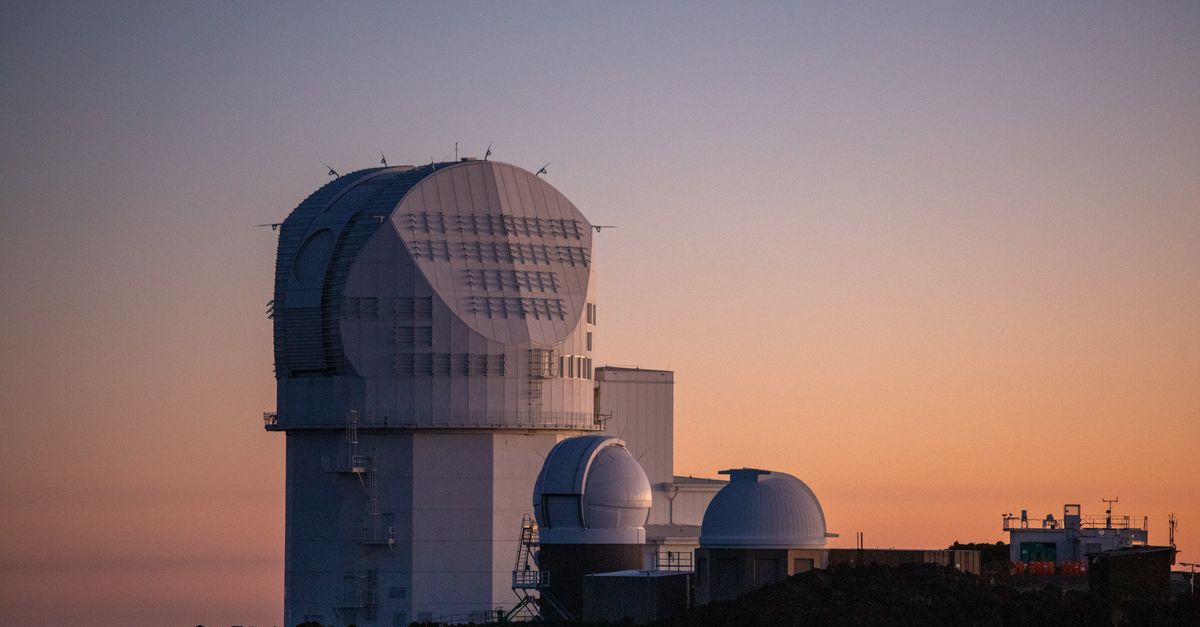
The Nancy Grace Roman Space Telescope, a significant new observatory from NASA, is scheduled for launch on Sunday, August 30, 2026, marking a pivotal moment for astronomical research. Liftoff is targeted for 7:26 a.m. EDT from Launch Complex 39A at NASA’s Kennedy Space Center in Florida. Scientists anticipate the mission will profoundly advance humanity's understanding of the cosmos, particularly in the search for exoplanets and the study of fundamental forces like dark energy and dark matter, which remain among the universe's greatest mysteries.
Named in honour of Dr. Nancy Grace Roman, NASA’s first chief of astronomy, the telescope carries the legacy of a visionary who championed space-based observatories. Dr. Roman, who lived from 1925 to 2018, was instrumental in advocating for telescopes that could operate above Earth’s atmospheric interference, ensuring their valuable data was made widely accessible to the scientific community. Her foresight led to the development of powerful instruments capable of observing the universe with unparalleled clarity. She is widely recognised as the "mother" of the Hubble Space Telescope and was a driving force behind NASA's broader Great Observatories programme, which included Hubble, the Chandra X-ray Observatory, and the now-retired Compton Gamma Ray Observatory and Spitzer Space Telescope.
A primary objective of the Roman Space Telescope is to conduct a comprehensive statistical census of planetary systems. Its wide-view capabilities are expected to revolutionise the field of exoplanet research, with experts suggesting the mission could identify an astonishing 40 times more distant worlds than all those discovered to date. This unprecedented capacity will provide critical data for understanding the diversity of planets beyond our solar system and the conditions necessary for their formation. Beyond planet-hunting, the telescope is designed to delve into the enigmatic nature of dark energy and dark matter, constituents that scientists believe make up the vast majority of the universe but remain largely invisible and poorly understood. By mapping the distribution of galaxies and galaxy clusters across vast cosmic distances, Roman will gather crucial evidence to shed light on these elusive phenomena. Its capabilities will also support a diverse array of additional astrophysics investigations, pushing the boundaries of cosmic discovery across various wavelengths.
Preparations for the launch have been meticulously carried out at NASA’s Kennedy Space Center. Teams at the Payload Hazardous Servicing Facility encapsulated the spacecraft within its protective payload fairing on Friday, August 21, 2026. This crucial step ensures the telescope is shielded from the rigours of rollout to the launchpad, the intense forces during ascent, and the harsh conditions encountered in the initial stages of its mission. The Roman telescope will be propelled into space aboard a powerful SpaceX Falcon Heavy rocket, a vehicle known for its substantial lift capacity.
The upcoming launch of the Nancy Grace Roman Space Telescope represents a major leap forward in space exploration and astronomical observation. By combining an expansive field of view with high-resolution imaging, the observatory is poised to deliver unprecedented insights into the universe's evolution, the prevalence of planetary systems, and the fundamental physics governing the cosmos. This mission stands as a testament to Dr. Roman's enduring vision for space-based astronomy and her commitment to making scientific data broadly available, promising to uncover new secrets of the universe for generations to come.
Reporting by the The Indian Morning Post Editorial Desk.
Related in Science

NASA Advances Lunar Base Plans with New Technology and Infrastructure Awards
NASA has unveiled a series of awards and mission updates aimed at expanding its lunar base exploration and scientific capabilities. These investments will support the development of commercial robotic delivery systems, a nuclear-powered rover, and crucial surface infrastructure. The initiatives are part of a broader effort to establish a permanent human outpost at the Moon’s South Pole.
8 November 2026 · 1 min read

NASA Selects 19 New Citizen Science Projects, Expanding Volunteer Research
NASA's Science Mission Directorate has chosen 19 new proposals for citizen science projects in 2026, aiming to expand public involvement in scientific research. This initiative follows a year of significant achievements for volunteer-led science, including the discovery of numerous brown dwarfs and a major milestone in data classification. The funding reinforces NASA's commitment to collaborative and transparent scientific methods.
28 October 2026 · 2 min read

NASA Explains Complex Vibrational Modes in Lightly Damped Structures
NASA research has provided a simplified framework for understanding how complex vibrational modes can emerge in structural systems, even when overall damping is low. The study details how the interaction between closely spaced modal frequencies, coupled through nonproportional damping, leads to increasingly intricate mode shapes and decay-rate separation. This framework offers new insights into phenomena such as mode veering and eigenvalue coalescence in engineering applications.
13 October 2026 · 2 min read

Geological Enigma: Australia's Spider Crater Imaged by Landsat 9
The Spider Crater, a striking geological formation in Western Australia's Kimberley region, has been recently captured by the NASA-USGS Landsat 9 satellite. Its unusual spider-like appearance is the result of a ancient meteorite impact, followed by millions of years of natural erosion. Geologists believe the distinct pattern is a remnant of the crater's central uplift.
13 October 2026 · 1 min read