ScienceBreaking
NASA Campaign Investigates Wildfire-Generated Pyrocumulonimbus Clouds
Scientists from NASA's INSPYRE campaign have been tracking elusive pyrocumulonimbus clouds, a weather phenomenon driven by intense wildfires.
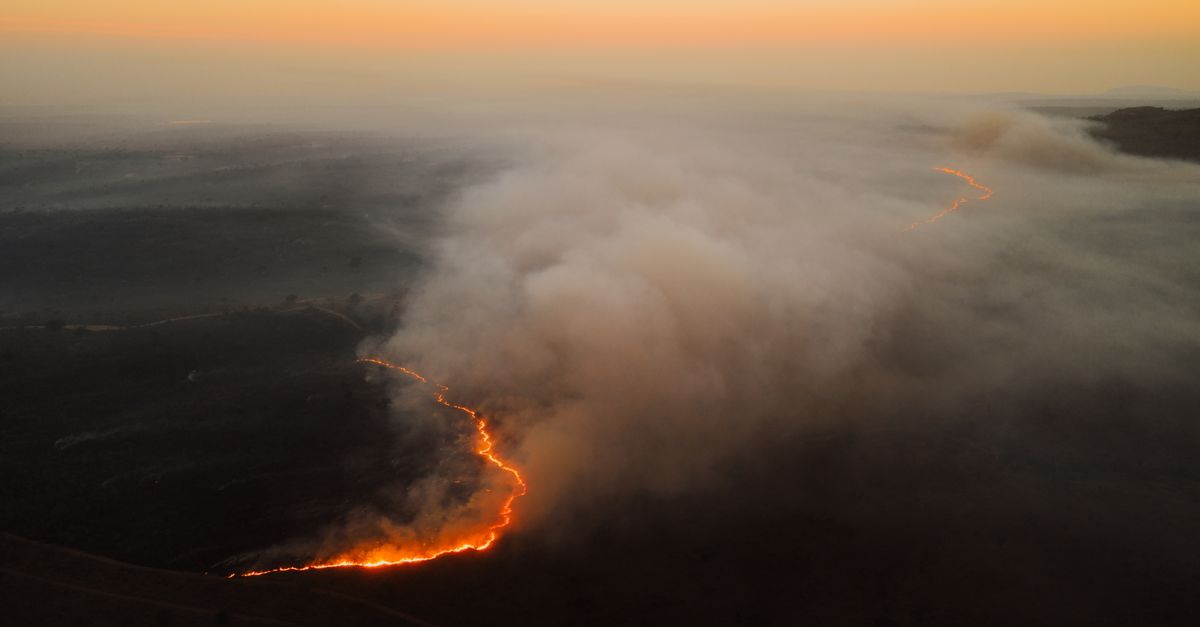
Scientists with NASA's INSPYRE (INjected Smoke and PYRocumulonimbus Experiment) campaign have been actively hunting pyrocumulonimbus clouds (pyroCbs) across western North America. This elusive weather phenomenon, generated by intense wildfires, has become a key focus for researchers aiming to understand its atmospheric impacts.
PyroCbs are formed when a powerful fire creates an intense chimney of smoke, funnelling it upwards. The largest of these clouds can propel smoke to altitudes of 30,000 to 50,000 feet (10 to 15 kilometres), reaching the cruising heights of commercial aircraft and even penetrating the stratosphere. Once in the stratosphere, the smoke can spread across continents, circulate the globe, and persist for significantly longer periods than it would in the lower atmosphere.
These fire-driven clouds are not merely smoke plumes; they are capable of generating their own weather. Rising above intense fires, pyroCbs can produce lightning and rain. Concurrently, they can unleash powerful winds that have the potential to whip the flames below into a greater fury, exacerbating the wildfire itself.
The significance of pyroCbs as a distinct atmospheric phenomenon became apparent around the turn of the 21st century. Satellite observations from that period began to reveal smoke plumes reaching altitudes previously associated only with major volcanic eruptions, highlighting the profound atmospheric reach of these fire-induced clouds. This discovery underscored the need for dedicated research into their formation and effects.
The INSPYRE campaign has observed specific instances of pyroCb formation, including the Wildhorse grass fire in eastern Idaho, which unexpectedly erupted with a massive pulse of smoke, initiating a pyroCb. Another event, the Widemouth 2 fire in Utah, was observed from a research jet on August 3 as part of the campaign's efforts. These observations are crucial for gathering data on the dynamics and characteristics of these powerful and far-reaching fire-spawned weather systems.
Reporting by the The Indian Morning Post Editorial Desk.
Related in Science

NASA Advances Lunar Base Plans with New Technology and Infrastructure Awards
NASA has unveiled a series of awards and mission updates aimed at expanding its lunar base exploration and scientific capabilities. These investments will support the development of commercial robotic delivery systems, a nuclear-powered rover, and crucial surface infrastructure. The initiatives are part of a broader effort to establish a permanent human outpost at the Moon’s South Pole.
8 November 2026 · 1 min read

NASA Selects 19 New Citizen Science Projects, Expanding Volunteer Research
NASA's Science Mission Directorate has chosen 19 new proposals for citizen science projects in 2026, aiming to expand public involvement in scientific research. This initiative follows a year of significant achievements for volunteer-led science, including the discovery of numerous brown dwarfs and a major milestone in data classification. The funding reinforces NASA's commitment to collaborative and transparent scientific methods.
28 October 2026 · 2 min read

NASA Explains Complex Vibrational Modes in Lightly Damped Structures
NASA research has provided a simplified framework for understanding how complex vibrational modes can emerge in structural systems, even when overall damping is low. The study details how the interaction between closely spaced modal frequencies, coupled through nonproportional damping, leads to increasingly intricate mode shapes and decay-rate separation. This framework offers new insights into phenomena such as mode veering and eigenvalue coalescence in engineering applications.
13 October 2026 · 2 min read

Geological Enigma: Australia's Spider Crater Imaged by Landsat 9
The Spider Crater, a striking geological formation in Western Australia's Kimberley region, has been recently captured by the NASA-USGS Landsat 9 satellite. Its unusual spider-like appearance is the result of a ancient meteorite impact, followed by millions of years of natural erosion. Geologists believe the distinct pattern is a remnant of the crater's central uplift.
13 October 2026 · 1 min read